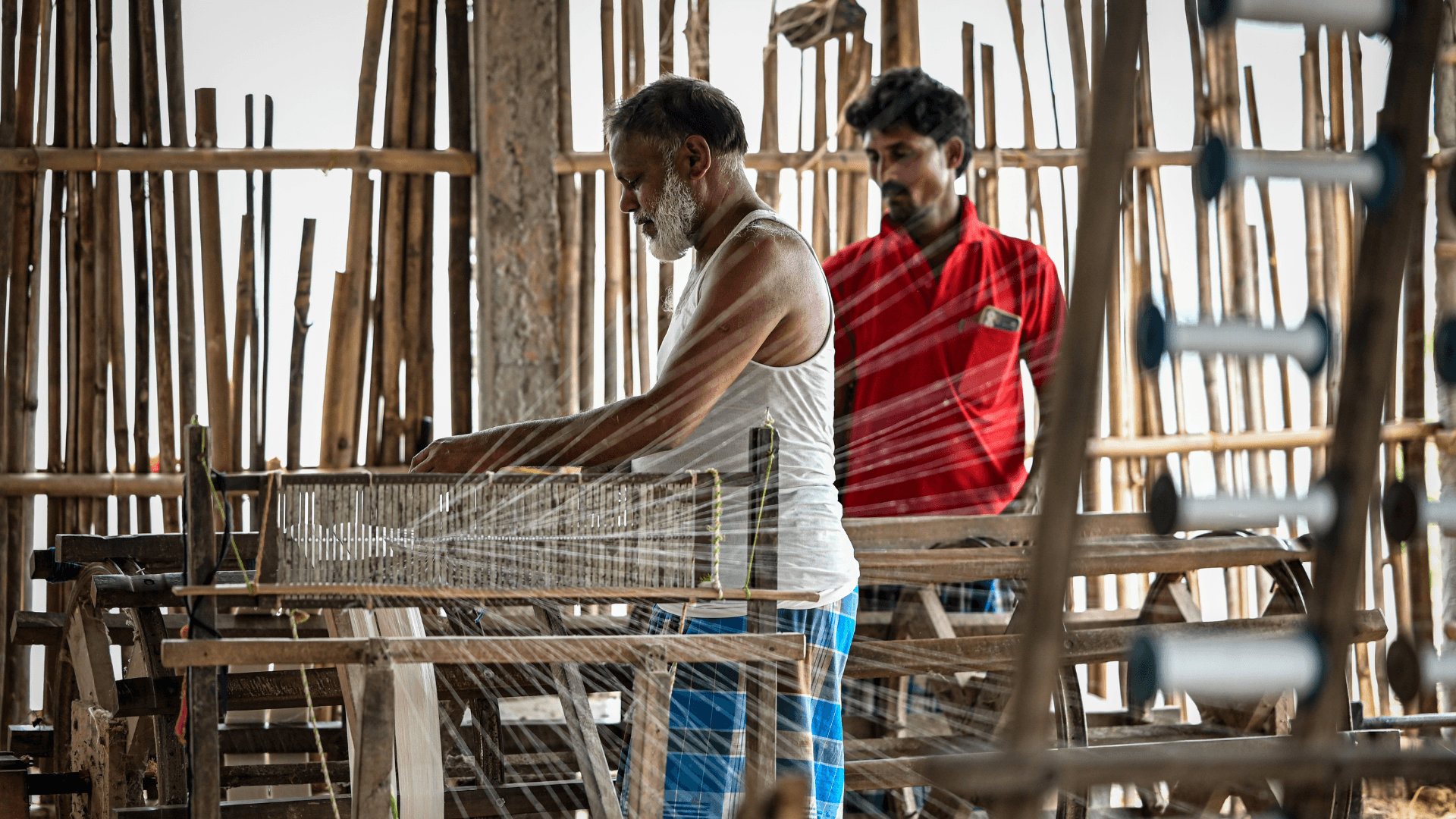
Rooted in process
& precision
Inside our Varanasi facility — the looms, the dye vats, the artisans, and the six-stage process that turns raw yarn into fabric worthy of export.
The Yarn Arrives
Every fabric's quality ceiling is set the moment yarn enters our gates. We source long-staple cotton from certified mills in Gujarat and Maharashtra, pure silk from Varanasi sericulture cooperatives, and linen from European suppliers processed locally for climate adaptation.
Each incoming lot undergoes a mandatory 48-hour hold. During this time our in-house testing team checks tenacity (resistance to breaking), twist-per-inch uniformity, moisture percentage, and visual defect sampling across a minimum of 10% of the consignment. Lots that fall outside our tolerance bands are returned — no exceptions, no renegotiations.
Warping the Loom
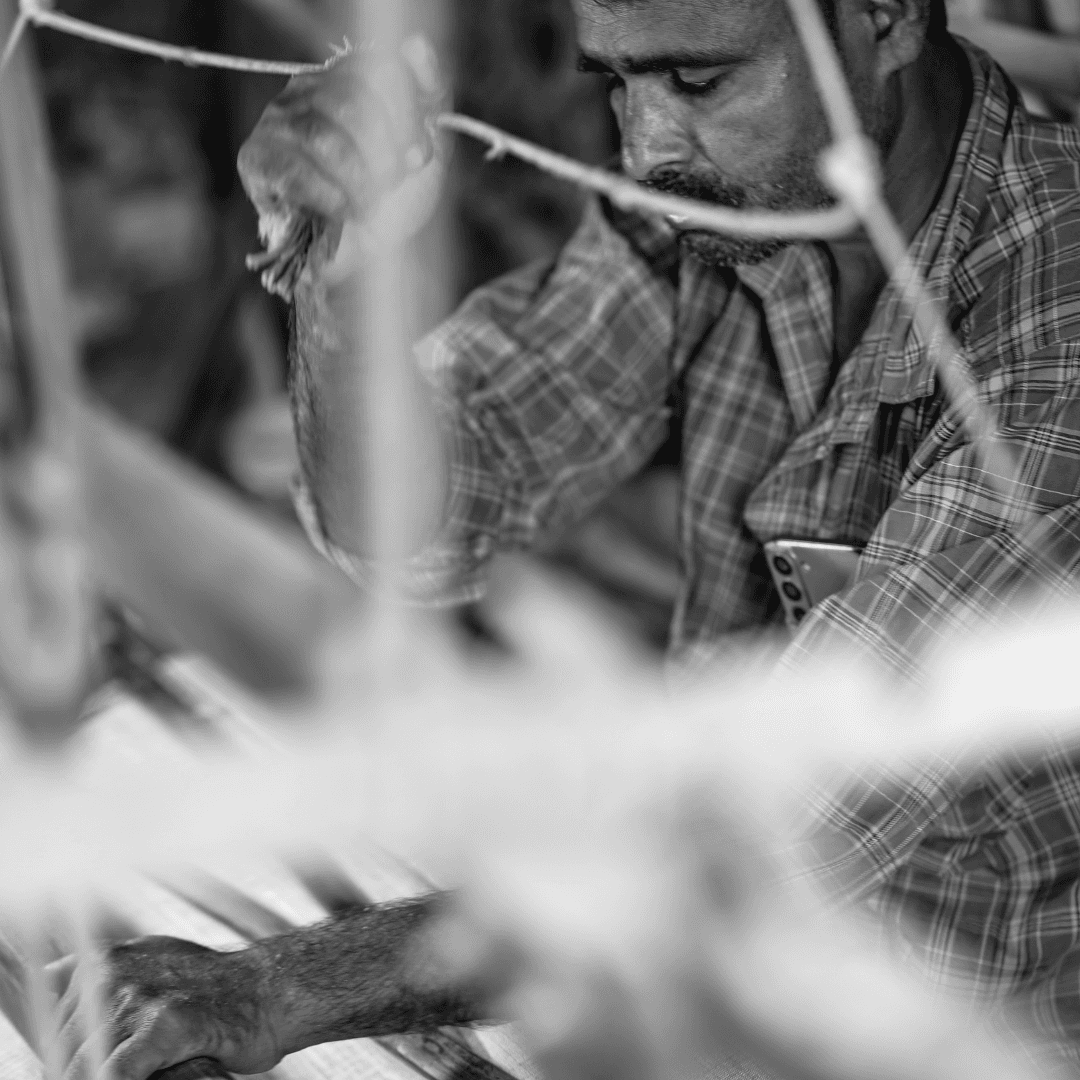
Warping is the invisible foundation of every fabric. A single beam for a 120cm-wide cloth may carry over 4,000 individual thread ends — and every one of them must sit at precisely the same tension or the finished weave will show inconsistency that no finishing process can correct.
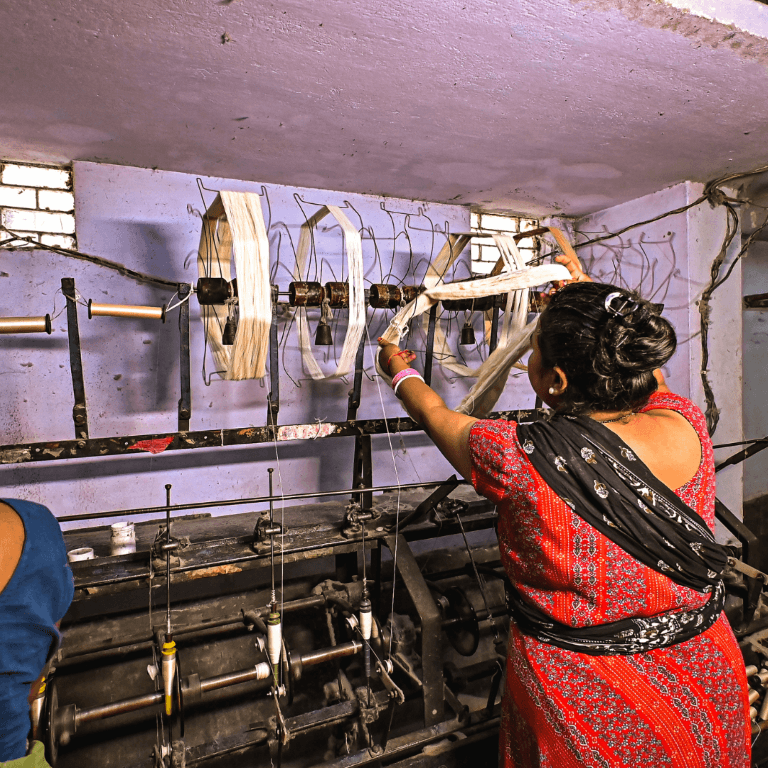
We use sectional and beam warping machines with per-end tension monitoring. Our warping operators — some of whom have worked this station for over twenty years — run a manual tension check every thirty minutes in addition to the electronic monitoring. Experience, it turns out, catches things that sensors miss: a subtle variation in yarn feel that signals a dying bobbin, a faint unevenness in the winding pattern that precedes a break.
The Loom Hall
Our 12,000 sq ft loom hall operates 120 machines simultaneously — Jacquard looms for the intricate brocade work Varanasi is known for, rapier looms for plain and twill constructions, dobby looms for smaller-scale geometric patterns, and traditional pit looms where handwoven orders are produced alongside the power-woven lines.
Real-time pick density monitoring and electronic stop-motion systems halt production the instant a thread breaks or a weft insertion fails — preventing a single defect from propagating across metres of cloth. Loom operators work in pairs during peak production: one managing output, one watching the fell of the cloth, where defects first become visible to a trained eye.
Colour from the Ground Up
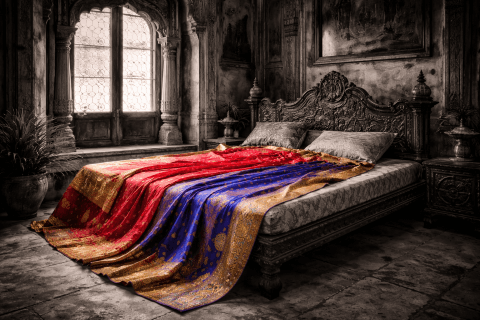
We dye before weaving for our Ikat range (resist-dyeing the warp yarn before it reaches the loom) and after weaving for most other constructions. Reactive dyes are used for cellulosic fibres — cotton and linen; acid dyes for protein fibres — silk and wool blends. All dyes are REACH-compliant and OEKO-TEX certified.
Colour fastness to washing, light, and rubbing is tested against ISO standards before release. Our target is Grade 4–5 on the ISO scale across all three tests — and we do not release fabric that falls below Grade 4 on any single axis. The dyeing unit also operates a closed water-loop system: 80% of process water is recovered, filtered, and reused, reducing effluent to a fraction of industry norms.
The Final Hand
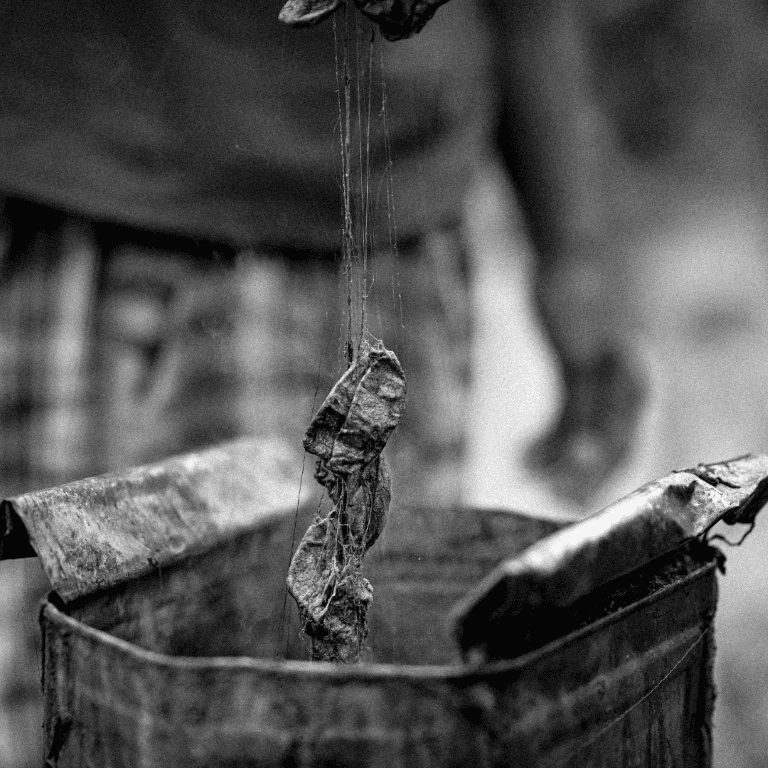
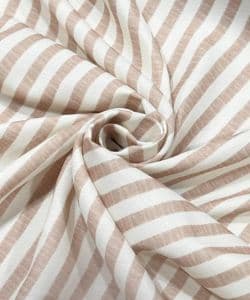
Finishing determines how a fabric behaves in the hand, in the wash, and on the body. We apply finishing treatments to specification — mercerising for cotton lustre, calendering for a smooth press finish, sanforising to pre-shrink before garment cutting, and enzyme washing for that distinctive broken-in softness that is increasingly requested by European fashion buyers.
Each finishing recipe is matched to the fabric construction and the end-use requirement. A fabric destined for shirting gets a different finish than one headed into upholstery. We hold over 40 finishing formulas on file — adjusted and refined over two decades of export experience — and can develop a custom recipe for buyers with specific hand-feel requirements.
Nothing Leaves Unchecked
Our QC team of twelve inspectors works entirely independently of the production floor — they report directly to management and have authority to hold any lot without approval. Every piece of fabric is inspected under standardised D65 daylight-equivalent lighting against the American 4-point system: penalty points are assigned for each defect, and the total penalty per 100 linear yards determines the grade.
We export only A-grade fabric. Seconds are either used internally for sample cuts and training material or sold locally — never exported under the Titico name. Each approved lot receives a unique code traceable back to its warp beam, dye batch, and loom — allowing us to isolate any quality issue with surgical precision if a buyer ever raises a concern.
Four loom types,
one standard
Jacquard Loom
Up to 10,000-hook capacity. Used for the intricate brocade patterns — Banarasi bootis, floral jaal, kimkhwab gold-thread work — that Varanasi is known for worldwide.
Artisans of Titico
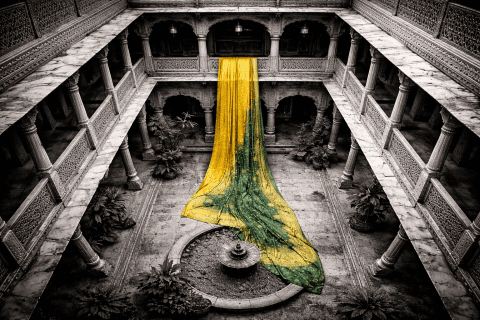
"The pattern lives in the cards. But the fabric lives in the tension — and only a hand knows what a machine cannot feel."
The factory in frame
Warp yarns stretched across the loom frame
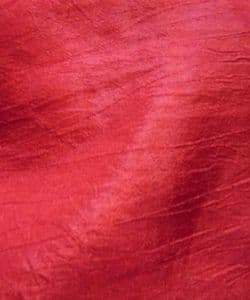
Raw silk skeins before dyeing
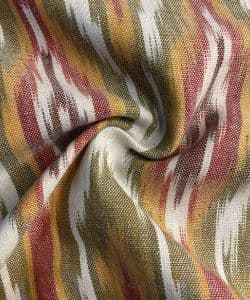
Ikat resist-dyed warp yarns
Artisan checking fell of cloth
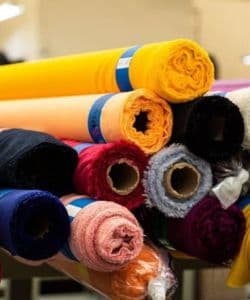
Cotton fabric off the loom
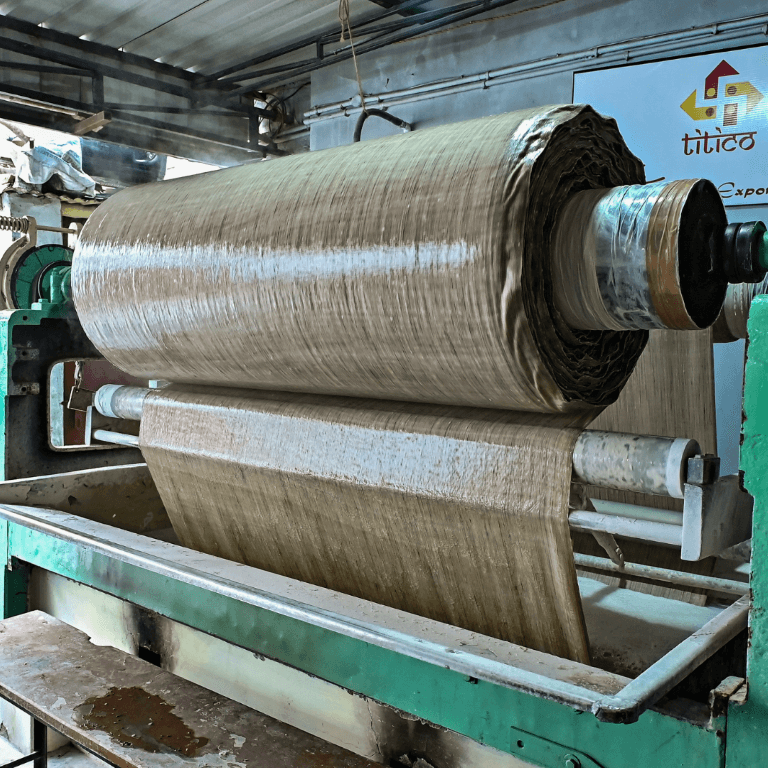
Finished linen before finishing unit
Manufacturing with conscience
Chemical responsibility
REACH-compliant dyes, OEKO-TEX certified inputs. No banned substances, no compromise.
Water stewardship
80% of process water is recovered and reused through a closed-loop effluent system.
Artisan welfare
Above-market wages, year-round employment, and healthcare for all production staff.
Full traceability
Each lot code traces back to the warp beam, dye batch, and loom that produced it.
See what the process produces
Browse 500+ fabric SKUs, or request your first sample in 7–10 days.